Showing posts with label peakrill. Show all posts

Friday, 24 December 2021

The Fisher- Folk or PShhrsha

A Fisher-folk

This is the first in a series of Alternative Hominids, a family tree of human species which diverged from their common ancestor a round the same time as Homo Sapiens. Fisher-folk's specialism makes them at catching water beasts and insects, and then tend to live in the region of lakes (particularly moorland scattered with dozens of lochan) and in cave complexes around river sources.

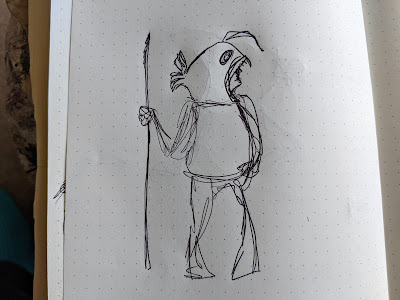
Sketches by Dan Sumption of Peakrill, Illustrations by Sheffield's legendary poster artist Martin F Bedford.
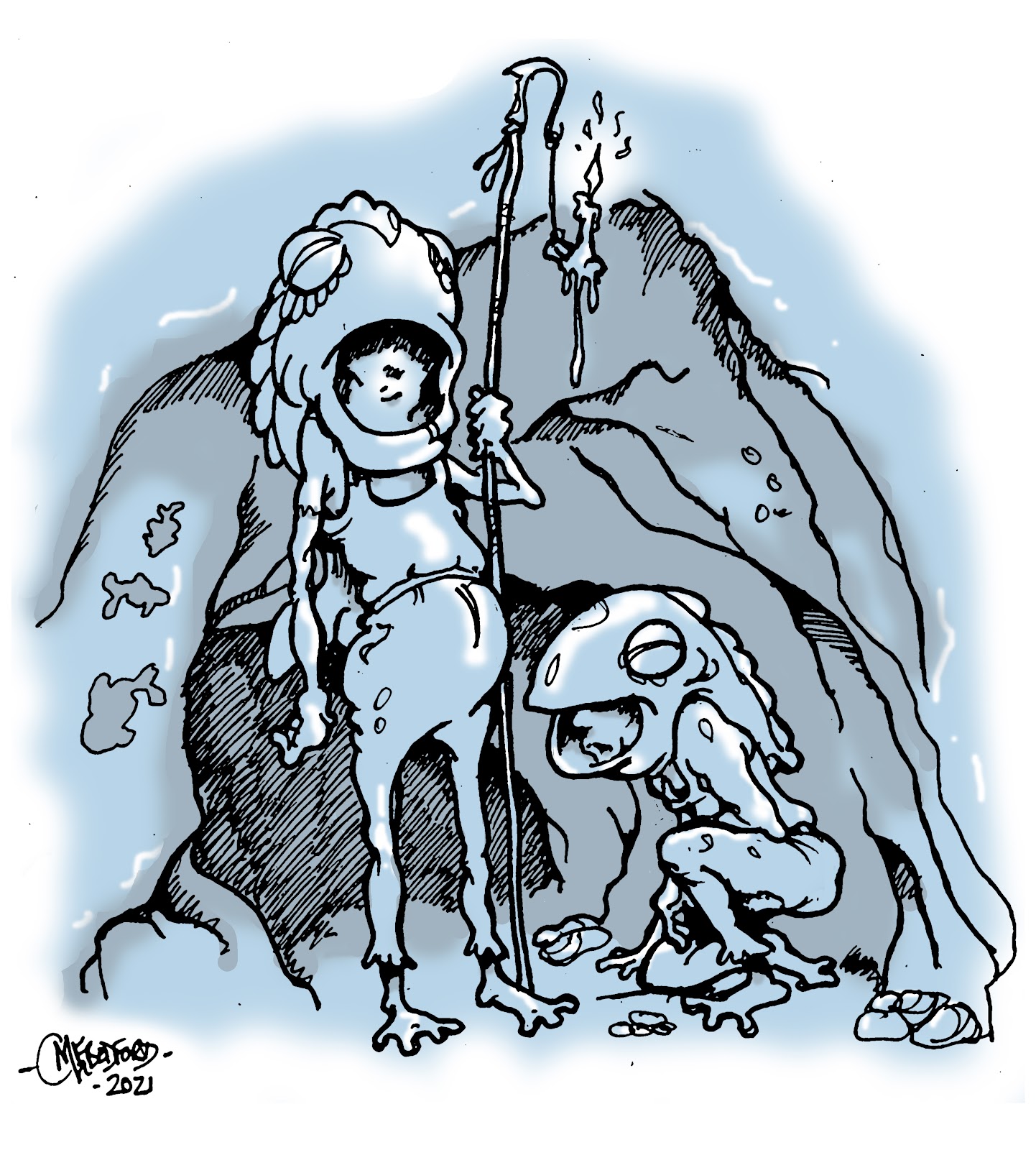
Cave-dwelling fisher-folk


Fisher-folk (or PShhrsha in their own language). are a race of hominids which followed a separate evolutionary path from homo sapiens around 223,000 years ago. They appear very much like small, lightly-built humans, apart from their wet, pale skin and their almost skeletal legs, which end in feet like those of a coot. Blood-flow to their legs is greatly reduced compared to a human’s, which lets them retain more body heat, and their feet allow them to walk easily across boggy terrain, and even to run short distances across water. They are excellent swimmers, as comfortable in water as out, and their fishing spears and tridents are also just as effective below the water’s surface.

Every fisher-folk wears a helmet made from some giant species of fish. Details of these helmets, and how they are worn, appear below.

Fisher-folk society is rigidly ordered and ethologically unique. There are very regular patterns in their ages and genders, with couples breeding every five years producing then a daughter, then a son, another daughter, and another son, before becoming infertile elders.

Prior to breeding, fisher-folk abandon their pescatarian diet for three months, eating fish maggot paté and becoming insectivorous for the duration. At the end of the three months the female becomes pregnant, and their is a six-month incubation period. For the first five years of their life the children are referred to as fry, then as smolt for the next ten years, before becoming adults at 16 years old.

Some members of the upcoming generation, soon to reach 16, take exception to the strictly assigned gender roles in PShhrsha, and are rebelling in various ways having to confirm to these stereotypes.

Fisher-folk speak in a bird-like sussurating language. Their names, impossible for a human to pronounce, appear to relate to their gender and rank, and perhaps hold a clue to the structure of their tribe, although nobody has ever taken the time to figure out how this system works. A fit topic for a future PhD. Names encountered sound something like SsShrp Fssh, Tshf Fssh, SvyrySshp Fssh, and FssSuSshs Shiyvyrysh.
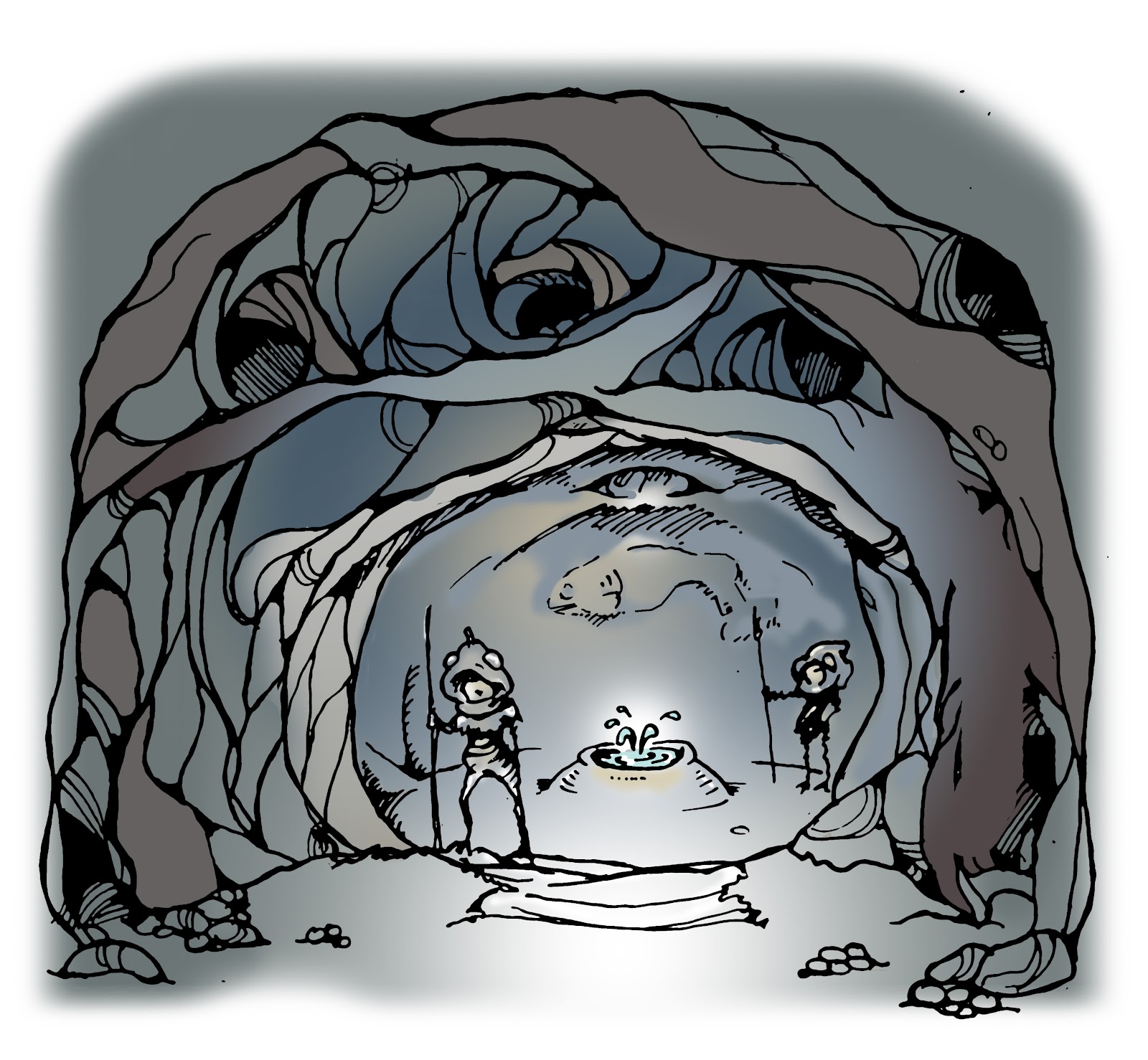
Fisher Folk temple

Helmets

All Fisher-folk helmets confer special abilities on the wearer. Non fisher-folk may struggle to put one on.

Blobfish

These are worn by fry and smolt fisher-folk. The youngest fry will be snuggled inside the body of the thing, while elder fry and smolts wear them with their head looking out of the mouth, the fish's tail hanging down their back, ending anywhere between the shoulders and the waist.

Blobfish confer protection against bludgeoning attacks.

Pike

Pike are worn only by the male shaman of the tribe. The head is placed vertically over the head, with holes in the throat for the wearer’s eyes.

The fearful visage of a pike helmet causes fear in any viewers who fail to make an Intelligence saving throw.

Devil fish

These are worn only by the female shaman. They look somewhat like an angler fish, and are worn whole, with the wearer’s face looking out of the fish’s cavernous mouth. The fishes pulsing lure dangles before the wearer’s eyes

The pulsing fish will charm any viewer who fails to make a Charisma saving throw.

Perch

The whole fish is worn as a hat, facing forwards.

Perch helmets confer a bonus to swimming speed.

Crayfish

The crayfish’s head is worn vertically, with eyeholes at the front.

Crayfish helmets confer a bonus to attack.

Eel

The head is worn stretched thin over the skull, with the long tail hanging down behind, often to the floor.

Eel helmets confer increased movement speed.
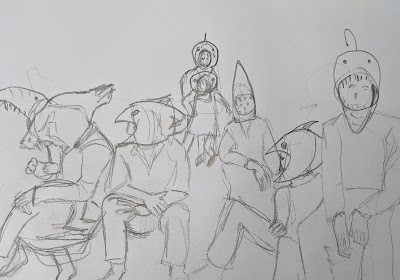

The Fisher-folk   

Monday, 13 December 2021

Future Peakrill Projects

Although I’m now full-steam ahead working on Mostly Harmless Meetings, I’ve also been thinking about future projects. The success of my SideQuest project has given me the confidence and inspiration to devote a large amount of my time to publishing my work (regular visitors may notice that the title and design of this blog have changed to reflect this).

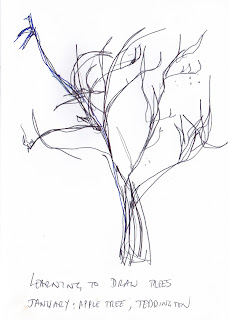
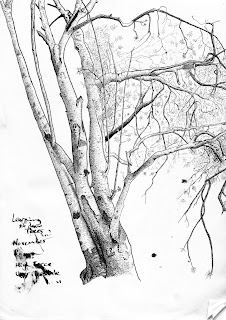
At the beginning of 2021, friends of mine at Liverpool Arts Lab launched a monthly magazine called Bodge. A number of us “claimed” pages in the magazine, and were then each expected to produce a page per month, containing anything we wanted to put on it. My page was called “learning to draw trees”, and was exactly that. One tree per month, with no expectations other than to see how much my drawing (and looking, and appreciation of trees) progressed over the course of a year. It went far better than I’d ever imagined, and I’m now thinking of adding “professional tree illustrator” to my CV. This month’s tree is still under wraps, and will be the cover of the final Bodge (due out on 23rd December) but here are my first tree from January, and my November tree (ink smears and all: imperfections are very much a part of the learning process):

January...


...November

For February’s ZineQuest I will be making a Learning to Draw Trees zine, containing all of my tree drawings from 2021 (plus a few extras), some thoughts and insight into the process, plus (to keep the project gaming-adjacent) the rules for the game “You Are a Tree”, kindly donated by Côme Martin.

After that, I will produce an illustrated hardback adaptation of one of the earliest stories of King Arthur, which I call King Arthur and the Deville Kitteh. This features in a 15th Century English text, The Prose Merlin, translated from a 13th Century French source. It tells the story of how Arthur defeated a terrifying kitten. I’m not making this up.

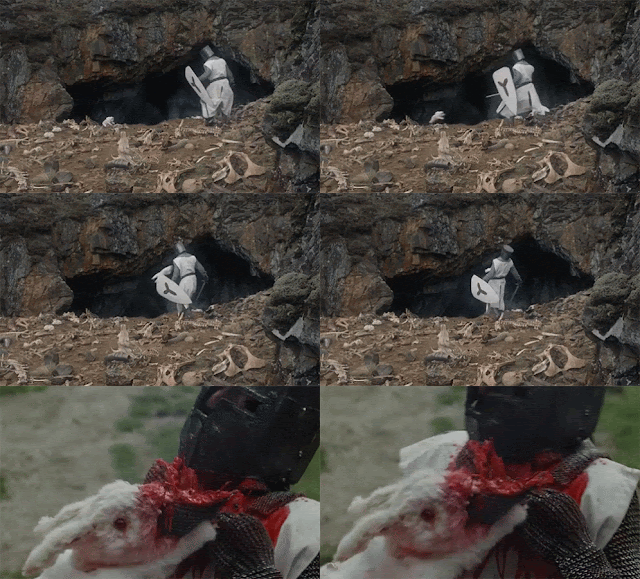
I firmly believe that this tale was the inspiration behind at least two scenes the film Monty Python and the Holy Grail. I’m adpting it as an alliterative poem, in the style of Gawain and the Green Knight, but with added Monty Python and Lewis Carroll references. Because it feels like they belong there. I’ll see if I can’t squeeze some Edward Lear in there too.

Spoiler alert

This is a pretty big undertaking, and I don’t envisage it seeing the light of day before Summer 2022 at the very earliest.  But I’ve made some first steps...

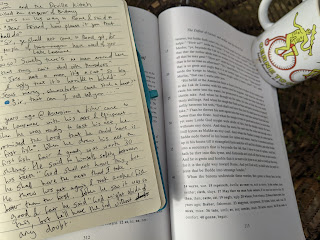
Adapting middle English into modern-ish English

Next up will be a zine full of (very) minor gods - gods so minor that they may not have any worshippers - complete with backstories and stats for RPGs. This project is inspired by Terry Pratchett's book Small Gods, and the gods will be generated by my Twitter bot Deity Galaxy.

I’m also thinking of doing another gaming zine, insired by the Combat system of Chris McDowall’s games Electric Basionland and Into The Odd. Here is an early impression of the cover.

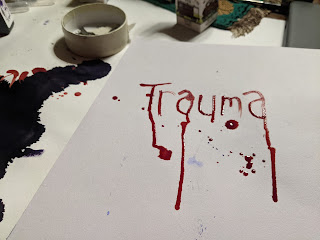
Trauma - cover concept

Finally, a while back I posted the first installment of a Mörk Borg adventure, Ship of Theseus. It’s taken me longer than planned to get the second part up, but a large part of the rest of the adventure is already written. At some point I plan on producing a print version of that too.

A few people have asked whether Mostly Harmless Meetings will be available to purchase after the Kickstarter. Absolutely! Obviously I will be making sure that all of my KickStarter backers get their rewards first, but once that’s all done and dusted then I’ll set up an online shop to sell the remainder. I envisage it costing around £10 for the zine, or £5 for the PDF version, though I will have to do some Big Sums before I can confirm that.

In the meantime, back to work on  Mostly Harmless Meetings…

Backgrounds & decorations for Mostly Harmless Meetings

Encounter titles for Mostly Harmless Meetings


Thursday, 26 August 2021

The Jacobin Calendar as inspiration for RPGs


I'm a big fan of the Jacobin Calendar/French Revolutionary Calendar ever since I discovered the Jacobin Calendar bot on Twitter. It's a decimal calendar with 12 months of 30 days each, split into 10-day weeks, plus an additional 5 festival days (6 in a leap year). Every day of the year has its own name, mostly associated with plants, animals, minerals, or tools, relevant to the time of year (this replaced the tradition of associating each day with a saint). I've given a version of the calendar at the end of this post.

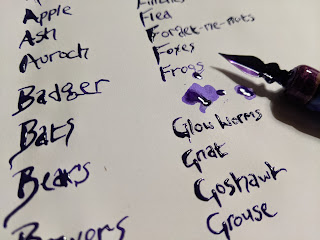
I've started using this calendar as a basis for time in my games. I've made some small adjustments (the French year starts in mid-September; mine starts in mid-March, as the world re-awakens after winter). The day names are great for adding flavour, and for determining events or theming adventures at that time of year. There is no reason why you couldn't rename some of the days (or all of them, if you can be bothered) after something specific to your campaign. How about a calendar of monsters?

The ten days of the week are simply named according to their number - so first day (primidi), second day (duodi), third day (tridi), etc. Again, these could easily be renamed.

All of the festival days take place in late September - harvest time. Again there's no reason why you couldn't move these, perhaps spreading them throughout the year. And you'll no doubt want to rename "Celebration of Revolution" if playing in a feudal or monarchist setting!

Here's the calendar...

Thursday, 18 February 2021

Why Peakrill?

The Hope Valley - old OS map and my interpretation

What is a Peakrill, and what relevance does it have to this blog? Well, the what part is easy: 

Peakrel (also Peakrill, Peakril) - Pronunciation /ˈpiːkr(ə)l/  - NOUN, rare British - An inhabitant of the Peak District.

What a brilliant word, eh? And as for the why, well it relates to the campaign that I am writing. For more, read on...